



Two neighbouring tenant farmers in Somerset say they have reduced on-farm emissions by 33%.
The pair have utilised precision fertiliser application, livestock monitoring systems and soil mapping across their businesses, while splitting technology costs between them.
Rob Addicott and Jeremy Padfield, who farm near one another and share technology and staff resources, have been working with the UK Agri-Tech Centre in partnership with Harper Adams University to trial agri-tech solutions on commercial farms, as part of the centre's Farming Smarter series.
READ NOW:听How a mixed farm in the Shropshire Hills is embracing regenerative farming
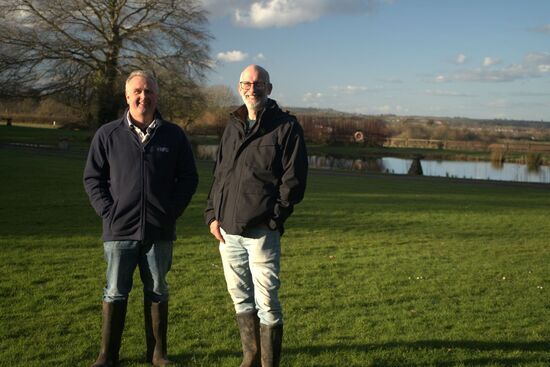
According to figures released through the project, the reduction was recorded over a one-year period.
They also reported improvements in soil condition and crop rotation resilience.
READ NOW:听North Wales organic farming estate showcases big climate wins
Precision technology
Mr Addicott said GPS-guided fertiliser spreading had allowed more efficient management of the application of nutrients.
"We only apply nutrients where they're needed, saving money and reducing runoff," he said.
He added that soil testing and mapping had helped identify variability across fields affected by compaction and heavy rainfall.
He said: "We've managed to create a profitable, sustainable business whilst looking after the natural environment and protecting ourselves against a rapidly changing farming situation. Technology has been a big part of that."
Mr Padfield has introduced automated weighing systems and electronic identification (EID) tagging within his beef enterprise.
"Agri-tech has opened up opportunities we couldn't have imagined years ago," he said.听
"Automated weighing systems and EID tags mean we can monitor cattle health without stress, and that data helps us make better decisions on feed and welfare."
READ NOW:听Big Farmland Bird Count highlights farmers efforts to restore nature
The farms have also used technology to tackle parasite challenges in sheep and to monitor biodiversity, including AI-powered bird-listening devices to identify species presence.
"But it's not without challenges. Tech can fail, costs are high and you need the skills to interpret the data," Mr Padfield added.
Helen Brookes, engagement director at the UK Agri-Tech Centre, said on-farm trials were essential to ensure innovation was practical and robust.
"Farming Smarter captures the transformative effect agri-tech can have on-farm and how it can drive both profit and wider sustainability for agricultural businesses. It is vital that we test and trial agri-tech on real commercial farms to ensure the technology is robust and relevant and stands up to the demands of farmers," she said.
Collaboration
Prof Michael Lee, deputy vice chancellor at Harper Adams University, said collaboration between farmers and researchers was key to building resilient systems.
"What Jeremy and Rob are demonstrating through this documentary series is that collaboration is our most powerful tool, because sustainability isn't achieved through technology alone. It requires shared learning, honest reflection and a willingness to rethink how we produce food.
"By bringing together practical experience with cutting-edge research, we can build farming systems that are resilient, productive and genuinely future-focused."
The work is documented in a five-part YouTube series, Farming Smarter, produced by the .


