



Left to right: Ben and Sam Parker.
How does a family dairy and ice-cream business grow from supplying a small Cornish hamlet to exporting to Shanghai and serving visitors to the 2012 Olympics, without losing sight of where it began?
Brothers Ben and Sam Parker run two sides of one business that depend on each other.
Ben, along with only non-family director David Jeffs, has built the ice-cream diversification to meet national demand, which has become larger, faster and more technically demanding.
Sam on the other hand has reshaped the dairy herd around a simpler, lower-cost system, swapping breeds, lowering yields and revising the milk profile. 听
They share an office on site, though they're rarely in it together for long. Asked whether that is an intentional decision, Ben says it's down to clear roles and accountability.
READ NOW: Future proofing is key to success of Gold Cup winning dairy business
"We're both busy and rarely get time in the office together, so we try to make the most of it when we do," he says. "There isn't time to argue."
The family has owned Callestick since 1935 when their great grandfather bought it as an investment, their grandparents started farming at Callestick in 1953 following the departure of the previous tenants.
Their mother Angela started making ice cream on the farm in 1989 after milk quotas and tight margins pushed the family to add value to the milk.
She built the trade herself though local shops, chefs and west country supermarkets and what began as a diversification became a food-manufacturing business in its own right, and gave the family a direct stake in the quality of every litre the herd produced.
READ NOW: Tradition drives success of Royal Highland Show award-winning Errington cheese
Although Angela and husband Sebastian are still involved, the day to day decisions now sits with their sons, who are constantly looking ahead to remain competitive and innovative.
For years, the dairy ran a conventional high-output model of around 90 to 100 Holstein Friesians, year-round calving, twice-a-day milking, a full total mixed ration and about 9,500 litres a cow.
Although the yields looked respectable, Sam decided small savings around the edges wouldn't go far enough. 听
He moved the herd to Jersey-Friesian crosses, switched to once-a-day milking and tightened calving into a nine-week spring block from mid-February.
Average yield dropped to 3,800 litres a cow, but butterfat rose to 5.2% and protein to 4.2% on far lower machinery, feed and infrastructure costs.
READ NOW: 50 years of Holstein breeding: The Lancashire dairy herd built to last
Sam says: "Reducing yield considerably was never a concern, with plenty of research into the spring calving system, we had full confidence that it was the best way to build financial robustness and resilience into the business."
Cows go out from calving and graze until early 鈥� mid November, depending on conditions.
Sam dries the herd off as a block around Christmas, then feeds grass silage and hay to manage body condition before calving begins again.
Through the parlour, a simple New-Zealand style set-up, he feeds only a basic 16% protein pellet 鈥榓s more of a social feed to get them to come through.'
Heat detection is through scratch pads, and a weekly feed budget guides grazing. Sam has resisted any technology he can't see a return on, and is confident managing for margin rather than litres.
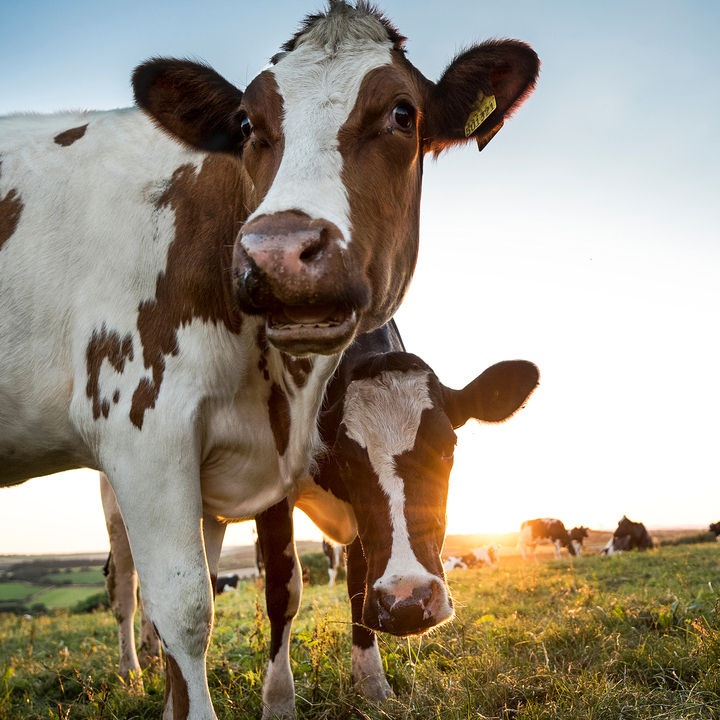
As the system changed, the business grew from fewer than 100 cows to almost 500, across about 445 hectares (1,100 acres).
Around 80ha (200 acres) grow cereals to finish beef cattle and provide straw for bedding. The herd was closed in 2019, with every replacement bred and every beef-cross calf finished on the farm.
The grazing platform sets the limit on growth. "We don't want to increase cow numbers and have to carry forage to them," says Sam.
"The system works and is profitable even in low milk-price years. To grow, we need to grow the grazing platform."
Last year the family completed the purchase of a neighbouring holding it had rented for 25 years, adding 28ha (70 acres) of grazing and enough security to justify fencing, tracks and water infrastructure that an annual tenancy never had.
Sam puts the herd's robust health partly down to the lower-pressure system, backed by structured testing and vaccination.
Lameness runs below 1% despite long walks to grazing, and mastitis at about 5%.
The business has tissue-tagged calves for BVD for four years without finding a persistently infected animal, and tests for Johne's three times a year, keeping positive cows out of the replacement programme.
The herd is also vaccinates for IBR, BVD and leptospirosis, and added bluetongue after positive cases turned up in the beef cattle last summer.
About half the herd's annual milk supply goes into production on site with the rest sold to Arla. Around 6,000 litres of milk a day goes into roughly 18,000 litres of finished ice cream.
Customers can choose from around 30 flavours along with eight sorbets, with some 90 products and pack formats.
"Vanilla still takes more than half of sales, although salted caramel is now among the top five," says Ben.
"Our newer lines like toffee popcorn, peach melba and a unicorn product for the family market are also doing well."
The business has reached well beyond Cornwall though not through a single plan. Instead, several of its better-known contracts started with chance introductions.
A London trade customer running kiosks and festival concessions took their ice cream to win a place as a vendor at the Olympics in 2012.
A trade-show conversation led to a collaboration with Levi Roots, producing Caribbean-inspired flavours including a rum and toffee apple ice cream and a mango and chilli sorbet.
"He came down to the farm, and he wore so much jewellery he couldn't possibly go in the factory. He was a really nice guy, though," says Ben.
The biggest step came in 2021, when sales director David spotted on LinkedIn that a buyer had moved from Tesco to Marks & Spencer and sent an introductory message.
Just 10 months later, the products were on shelves.
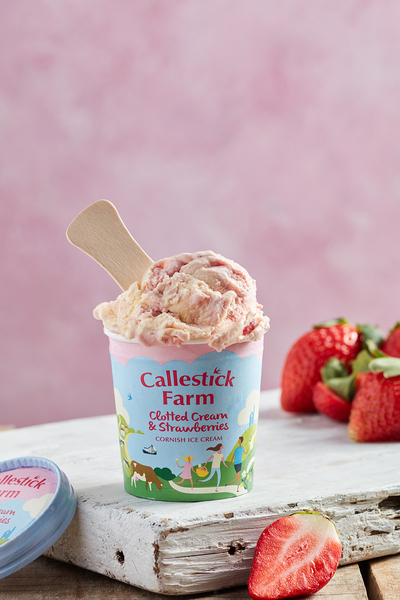
"The fact that we have the farm and factory here, and we're genuinely using our own milk, is what they buy into," says Ben. "They can tell that story on the pack, and it helps them justify the premium."
The brothers spent 拢1.4 million meeting the retailers' quality, capacity and food-safety requirements, adding equipment, floor space and a spiral freezer that cut freezing from an overnight blast to about 60 minutes.
Output has gone from around 750,000 litres a year before M&S to 2.3m last year, more than a million of it for the retailer alone, whose representatives visit five or six times a year and are shown the herd from dairy calves to milking cows.
While national retail has seen production soar, the business still runs to Cornwall's seasonal cycle.
The ice-cream parlour 鈥� open every day during the summer months - drops to long weekends in winter, and the factory adjusts its schedule, with staffing rising and falling alongside.
Ben says: "The cows dry off around Christmas while the factory still has retail customers to service so the business has to plan milk supply, frozen stock and productions across the whole year.
"We only ever use Callestick milk for Callestick branded products so we build finished frozen stock, but we do buy in Cornish milk during January and February for M&S production. We buy Cornish cream to make the ice cream all year."
The next phase is already moving. The family plans more cold storage and operational space so it can stop renting facilities off the farm and the intention is to move agricultural buildings out of the central yard.
"Because the site grew piecemeal around the original farmstead, that means demolishing and rebuilding, putting in a new access road and sequencing the work without interrupting milk production or the factory," says Ben.
"If you were on a greenfield site and could just extend off one side, it would be a lot easier. But there's quite a lot of shuffling around."
Both brothers have teenage children but neither wants to load them with the expectation, although remain hopeful that the option is there.
"We both enjoy what we're doing," says Ben. "If they want to come into the business, we want to keep growing it so there's an opportunity for them, the same as there was for us."
When asked what their proudest achievement, their answer returns to the family's heritage.
听"There was a Cornishman who'd moved to the Cotswolds who sent me a photo recently of our ice cream in his local shop," says Ben. "
Just seeing out name and brand and everything we built - that was pretty cool."
51AV视频facts
路听听听听听听 500 cows run are managed across 445 hectares (1,100 acres)
路听听听听听听 Average yield has fallen from about 9,500 litres to 3,800 litres a cow, while butterfat has risen to 5.2% and protein to 4.2%
路听听听听听听 6,000 litres of milk a day are turned into roughly 18,000 litres of finished ice cream.
路听听听听听听 30 ice-cream flavours
路听听听听听听 90 different products and pack formats
路听听听听听听 Annual output has climbed from about 750,000 litres to 2.3 million litres


