Reduced fertiliser costs and more milk solids means including clover in the sward could bring a benefit worth 拢215 per hectare, according to Irish research.
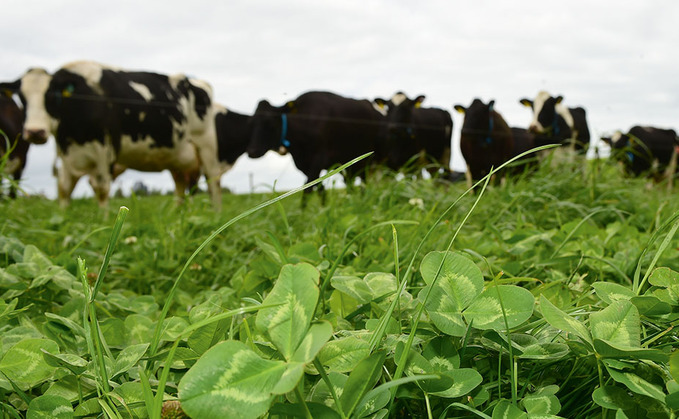
Grazing perennial ryegrass and white clover swards creates the potential to not only improve milk solids production per cow, but also reduce fertiliser costs.
A four-year trial carried out at Teagasc Moorpark in Ireland compared performance on perennial ryegrass-only leys receiving 250kg N/ha, with perennial ryegrass leys including clover.
The clover leys received either 250kg N/ha or 150kg N/ha.
Nitrogen was applied at the same rate and timings up until May on all treatments.
It was after May that the fertiliser was reduced for the remainder of the year on the clover 150kg N/ha treatment.
Results showed that herbage production remained the same (14.5t DM/ha) on clover leys receiving less N, while there was an increase in milk solids, leading to improved profit/ha (see panel).
Improving nitrogen efficiency is central to Yara's agronomic advice, which stems around producing more from less.
Teagasc grassland research officer Michael Egan says these benefits will only be seen in swards where clover contents average 20-25% through the year.
"If you have sufficient clover in the sward, there is scope to reduce nitrogen application by up to 100kg N/ha in the later part of the season, June onwards," he explains.
Maintained herbage production: The clover leys receiving 150kgN/ha produced the same amount of herbage versus perennial ryegrass leys getting 250kg N/ha (14.5t DM/ha/year) +4% increase in clover: On the leys getting the lower rate of fertiliser versus those getting the higher rate (27% vs 23%) +33kg milk solids/cow/year: Cows grazed on clover swards produced more milk solids compared to those grazed on perennial ryegrass-only leys +鈧�252/ha/year (拢215): The benefit of having clover swards with 150kg N/ha applied versus perennial ryegrass-only with 250kg N/ha applied - as a result of increased milk solids and reduced fertiliser +19% improvement in nitrogen efficiency: The nitrogen efficiency on clover leys receiving 150kg N/ha was 59% versus 40% on perennial ryegrass-only leys receiving 250kg N/ha
Reduced fertiliser rates on clover swards - the benefits