



The fourth generation at Buarth Yr Oen Farm, on the outskirts of Lampeter, Gethin Mathias is a stockman with an eye for genetics and quality livestock.听
Despite his father was a teacher and his mother an solicitor, he spent countless hours on the farm as a child with his uncle, Irwel Jones, who then ran the family enterprise, where he learned the ropes and developed his ambition to pursue a career in farming.听
Not the easiest farm to manage, with 90% of the ground being steep. The yard sits at 229 metres (750ft) and rises to 366m (1,200ft) on the hill grazing, which is rented from the Crown Estate.听
The farm extends to 243 hectares (600 acres), including听 including 243 hectares (600 acres) of hill grazing, which is shared between four local farmers.听
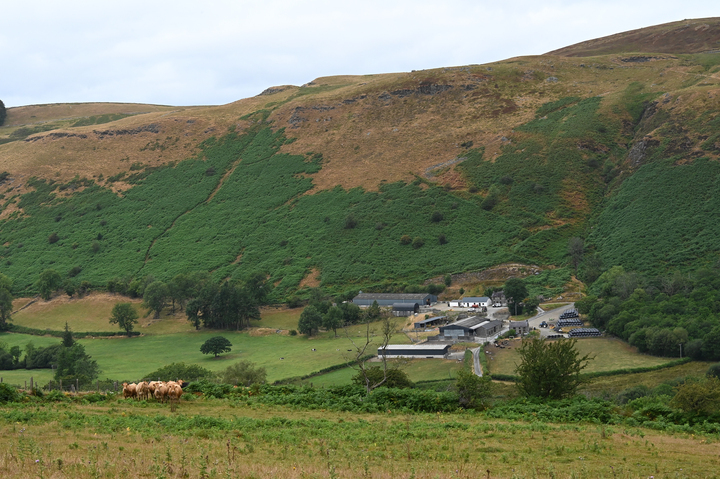
Now living on the farm alongside his wife, Miriam, and their two daughters, Gwenno and Martha, Gethin farms alongside Irwel, who remains heavily involved in the day-to-day running of the business.听
A flock of 700 hefted Tregaron-type Welsh ewes forms the backbone of the enterprise, continuing Irwel's years of breeding development. However, in 2015, Gethin introduced a flock of Beltex, which has since become his passion.听
Cattle are also part of the enterprise, running a herd of 20 pure Limousin cows, which has been reduced in recent years to allow room for 180 calves, which are reared in small batches over the year.听
"Both my uncle and I share an interest in suckler cows. However, with rising replacement costs and limited housing space during the winter, the calves have allowed us to expand our cattle numbers and keep the best heifers as replacements," he says.听
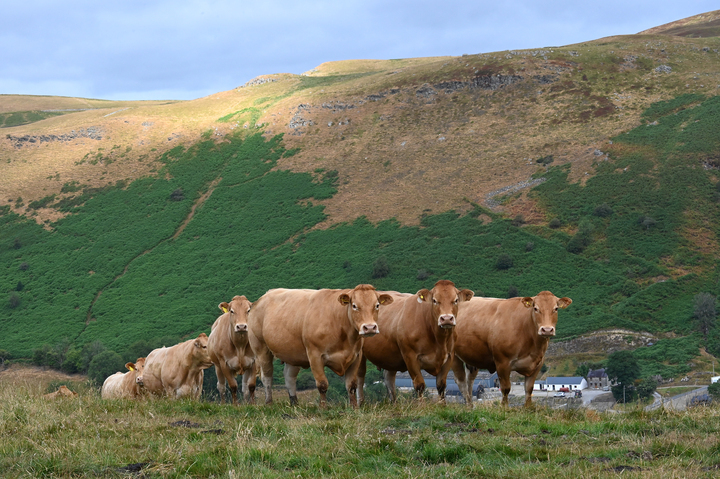
Farming in such an exposed landscape means the whole system is run as extensively as possible, with the Tregaron-type Welsh ewe remaining at the heart of the enterprise.听
Gethin says: "We run a medium-sized ewe which is close to the ground. The Tregaron ewe is a mobile sheep with a tight white fleece and small ears. We cull hard, not only to maintain type but also to ensure we are breeding sheep that can thrive in this environment."听
They previously sold draft ewes, but the strong cull ewe trade in recent years has meant ewes are now kept until six years of age before being sold.听
For the whole flock, lambing commences in March and continues until mid-April. The Beltex flock is lambed indoors, along with some Welsh singles, which are turned out shortly afterwards, while the Welsh multiples lamb outdoors on the in-bye ground.听
"The breed is cheap to keep and highly functional. The ewes are checked twice a day and minimal intervention is required," says Gethin.听
Half of the Welsh ewes, those truest to type, are kept pure, while the remainder are put to traditional Bluefaced Leicester tups, bought from the Cumbria based, John Helme's Ormathwaite flock to breed Welsh Mules, which are sold through Llanybydder Mart. The majority of the pure Welsh lambs are retained until December, allowing the best tup and ewe lambs to be selected for breeding.听
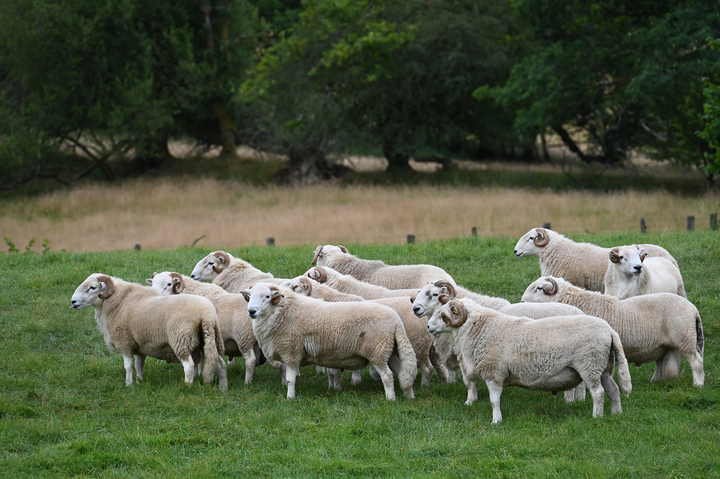
In early July, the lambs are weaned and the first selection of breeding stock is made.听
Each year, 200 Welsh ewe lambs are retained, while 20 yearling tups are sold through Tregaron Mart at the annual breed sale in early October.听
"We are a forage-based system, with grazing and 40 ha (100 acres) of silage bales utilised by the stock. Very little concentrate is fed, with a greater focus on mineral buckets and copper boluses. Selling the first load of lambs in the autumn," he adds.听
The family have always been consistent vendors, but notable success has come in recent years. In 2023, they set a breed record with a tup selling for 拢3,800 to Dylan Lewis, Ceredigion, which has since bred sons to 拢3,100.. The following year, they broke their own record when Carmarthenshire breeder Dafydd Lewis purchased a tup for 拢6,600.听
In recent years, a small selection of rams has also sold well through Rhayader Mart.听
The remaining Welsh lambs and Mule tup lambs are marketed deadweight through Dunbia at Llanybydder, targeting carcasses in excess of 20kg.听
Despite the Tregaron Welsh being the ideal sheep for the hills, Gethin is also a keen showman, particularly in the fatstock and winter show circuit.听
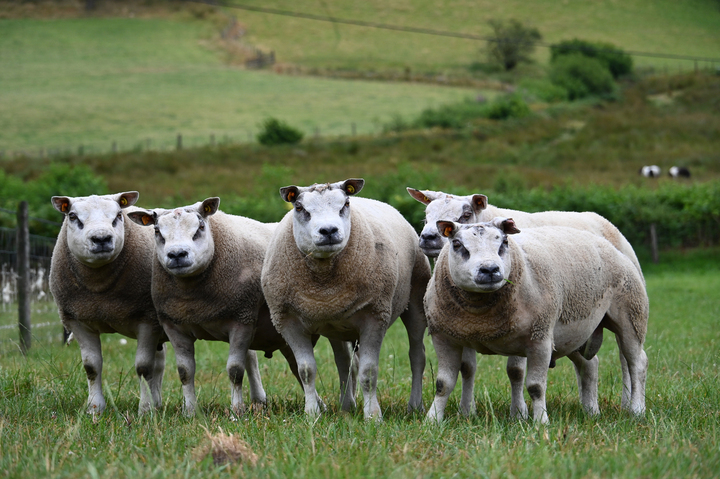
11 years ago, he decided to invest in a breed capable of competing in the continental show ring, and for Gethin the obvious choice was Beltex.听
"I wanted a breed that would handle this landscape, run in harmony with the Welsh flock and deliver strong commercial attributes. The Beltex had already proved itself for other local farmers and has continued to do the same here. Since 2017, the flock has grown to 40 breeding ewes and the aim is to establish a closed, home-bred flock of 60."听
Running under the Buarth prefix, the flock has largely been built from the Airoylland flock of Neale and Janet McQuistin, near Newton Stewart.听
After purchasing his foundation ewe, Airoylland Nottie, through the sale ring, Gethin has continued to buy females from the flock, purchasing two or three draft ewes each year for the past nine years.听
Two years after establishing the flock, he marketed his first crop of tups at Welshpool Livestock Sales, sired by Balbrydie Winston, with the pen averaging 1,400gns.听
"I did not expect such a strong trade in that first year, and it confirmed that Beltex was the right choice. More recently, I have shifted my focus from showing to sales, as the Beltex sales come relatively early in the season," he adds.听
His most influential female has been Airoylland Popstar, who has played a major role in his flushing programme.听
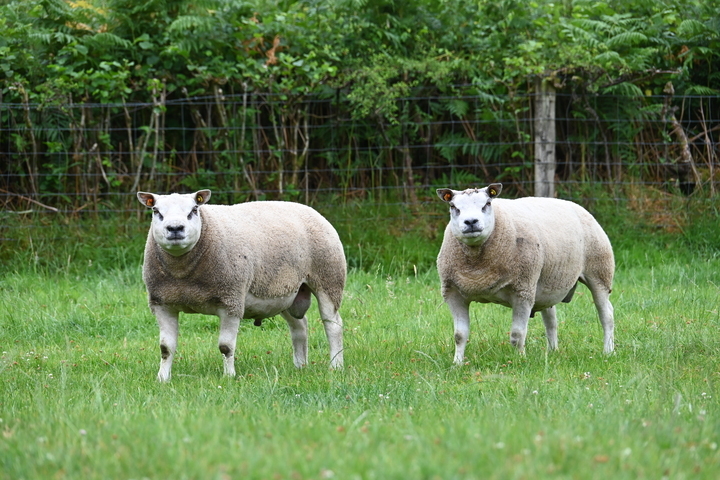
"To help grow the flock, I have used embryo transfer. This has been done cautiously, only breeding from proven ewes. Every donor ewe is still bred naturally as well, and it is working well towards building the closed flock I am aiming for," says Gethin.听
The Welsh ewes have also proved their versatility, with MV-accredited ewes successfully being used as embryo recipients.听
"We typically use Suffolk Mules as recipients. However, in recent years we have tried the Welsh ewes and they have taken to the job really well. Running a separate MV-accredited flock does add another layer of complexity, but maintaining high health status is a priority and it has worked well," he says.听
Typically, Gethin does not sell females, but on the two occasions he has, they have been in strong demand, selling Buarth Sexything for 1,600gns at Welshpool and another ewe, named Buarth Jailbird, for 1,800gns after taking female champion.听
Male genetics to influence the flock include Faughhill Elephant In The Room, bred by Grant Maxwell, Melrose. He was purchased as part of a four-way syndicate in 2020 for 8,000gns and has bred successfully across the four flocks.听
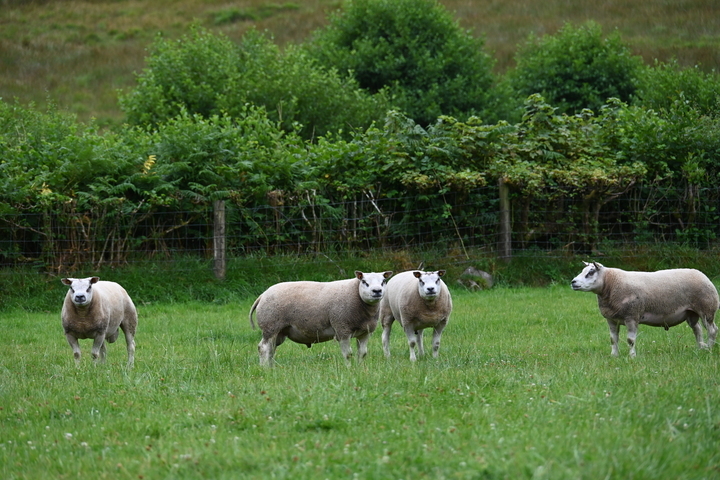
Wannops Hermes is one of the latest additions, having been purchased as a yearling in 2023 from James Wannop, Preston. His first crop of sons sold to 3,500gns last year, averaging 1,500gns.听
Demonstrating his eye for stock, when Gethin missed the opportunity to buy the ewe Artnagullion Buttercup, instead purchased her son, Gyffin Dexter. After buying it as a lamb, he sold it as a yearling, which went on to stand second at the 2019 Carlisle Premier Sale. A son of Smart Ass Buster from a flush out of Woodies Rice Crispie, Gethin retained semen for his own use before selling the ram to Andrew Morton, Stirling, who later sold a share to the Buckle family, Kirkby Stephen. The ram has since become one of the breed's most widely used sires.听
Gethin says: "We sell around 20 home-bred yearling Beltex rams annually through Welshpool and Carlisle. At both sales we target the commercial market, so every tup must have the basics. Above all, we want a sheep that carries its head well, has sharp ears, a tight skin, a strong top and excellent mobility, which is essential on our steep ground."听
To prepare for sale, the selected lambs are shorn in July and wintered on grass.听
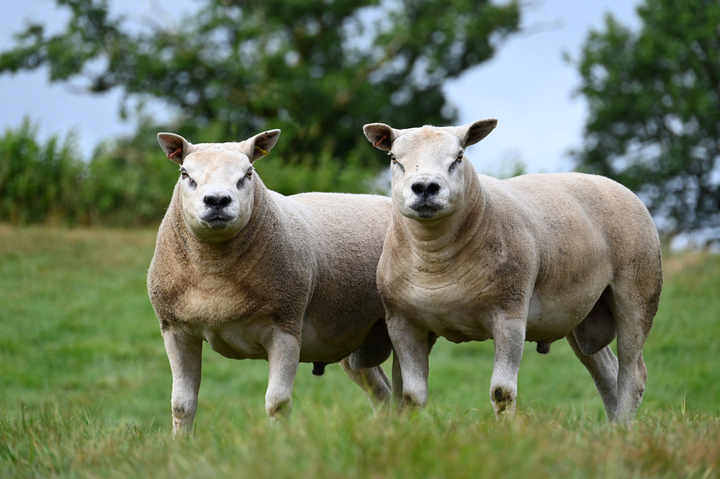
This approach has delivered consistent returns, with last year's pen of four at the Carlisle Premier Sale averaging 拢2,808.听
On the back of the Beltex flock's success, the family also established a Texel flock under the Buarth prefix in 2022, already selling rams through the NSA Wales and Border Ram Sale to 1,700gns.听
"Despite living in an exposed area, the breeds are playing to their strengths and working in harmony. As a family, breeding remains our passion and we strive to produce the very best stock we can across all the breeds," says Gethin.听
51AV视频facts听
-
Running 700 hefted Tregaron-type Welsh ewes听听
-
Buarth Beltex was established in 2015 and has grown to 40 ewes听听
-
Continental suckler cow herd alongside a calf-rearing enterprise听听
-
Selling Welsh and Beltex rams annually听
听
听


