


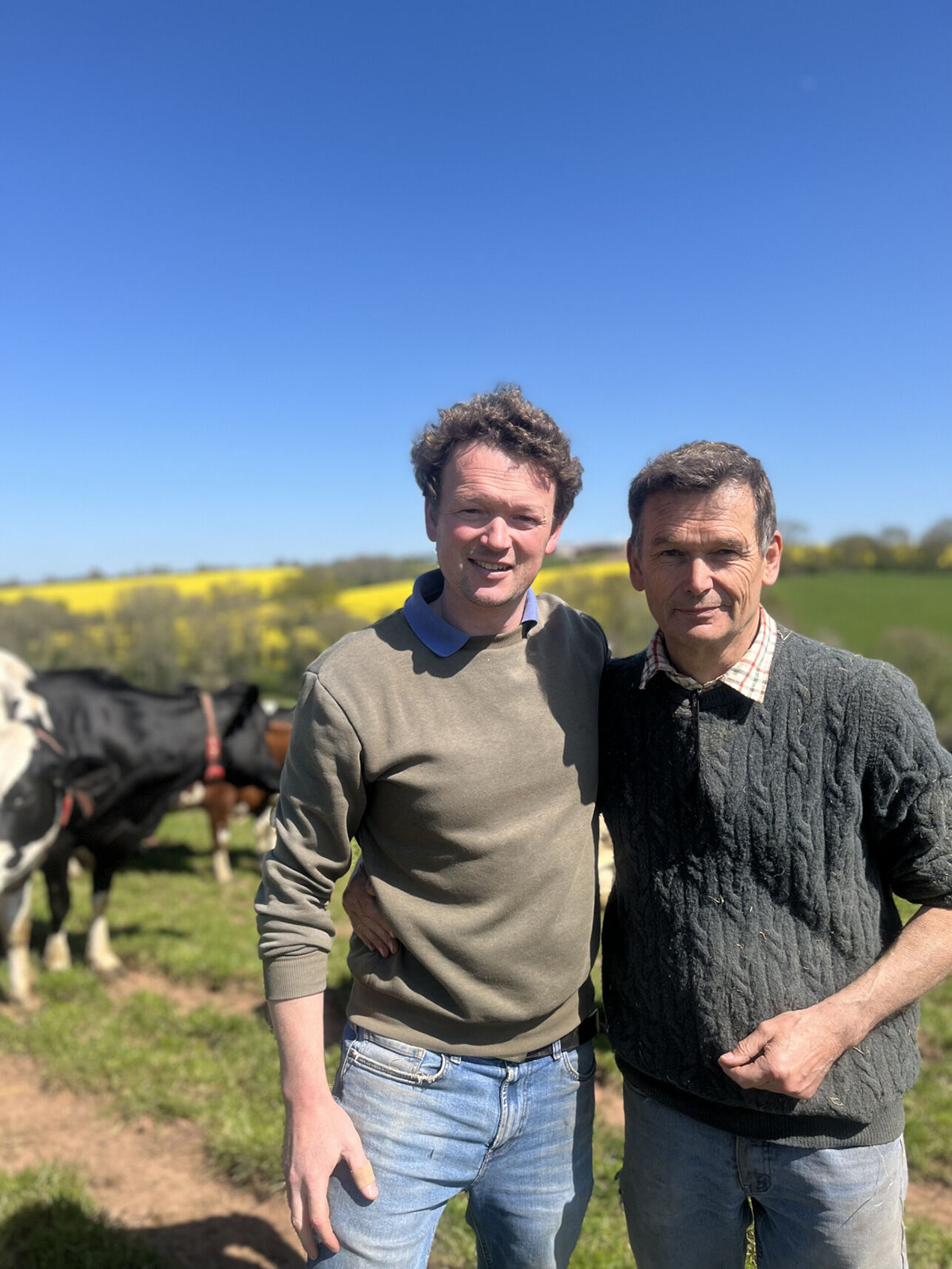
听At Broadfield Farm, Bodenham, third generation farmers, the James family are combining tradition with innovation, using milk vending machines to reconnect cosumers with the product, and the people behind it.
Farming is the bread and butter for the family, but with Mark James farming alongside his two sons, Sam and Jacob, they felt they needed to diversify to make the most from what the farm had to offer.
Sam James says: "Dairy farming is our passion, but we also run a vineyard, holiday lets and glamping. That has given us a bit more of a link with the public, and it has shaped how we think about selling our milk."
Dairy has long been part of the farm's history, although the business stepped away from milk production in 2015 before returning in 2021, running a smaller herd of 140 cross-bred cows through robots. 听
"Returning to dairy brought we a completely different approach. We didn't want to be price takers, we wanted to be price makers. That meant finding a way to sell direct and connect with the customer," adds Sam.
听The answer came in the form of milk vending machines.
"We recognised early on that machines in convenient locations, were becoming the modern milk round. People want local, fresh produce, but it has to fit into their daily routine," Sam says.
The first machine was installed in Bodenham, across the road from the farm at a local garage in April 2022. Sam believes this was a good time following the rise in interest of where food comes from during the Covid-19 pandemic.
Since then, the business has grown to 16 machines across Herefordshire, Worcestershire, Gloucestershire and Shropshire.
"It's about meeting the customer where they are. It is no good expecting people to come down the farm track. By working with local businesses, farm shops, garden centres, garages, we create a system that benefits both us and the location of our machines," he adds.
Alongside convenience, quality is a key selling point. The herd is a mix of British Friesian, Jersey and Holstein genetics, managed within a grazing-based system and milked through robots.
"We're not chasing maximum yield. We want cows that suit the system with longevity, consistency, and good-quality milk. That balance is more important than pushing production," he says.
That approach is reflected in the milk itself, producing butterfat close to 5% and strong protein levels, which has been reflected in the double Great Tate Gold Star Award they won in 2023, the highest award in the country.
The milk is gently pasteurised on-farm using a low and slow method. The milk is heated to 64掳C and held at that temperature for 30 minutes, before being cooled gradually back down to around 3掳C. By doing it this way, they interfere with the milk as little as possible. There is very little difference between milk straight from the bulk tank and what comes out of the pasteuriser.
Educating customers is a big part of the process. "A lot of people have grown up with supermarket milk and don't realise how processed it can be. When they try ours, especially the older generation, they often say it tastes like milk used to. Once they've made that connection, they tend to stick with it," he says.
The vending machines also offer flavoured milkshakes, made fresh at the point of sale.
"It's something people can see happening in front of them. It's not bottled months in advance, it's fresh milk with a small amount of flavouring, and there are not many food products that can be said about these days," he says.
Despite the growth of the direct to consumer business, the farm still supplies around 70% of its milk to a contract to First Milk.
The vending machines have added value to the business, but they also come with logistical challenges. They work within a 30-mile radius and Sam says with milk being a low-value product, they need volume and efficiency to make it work.
But the model is proving its worthwhile to the family, not just financially, but in strengthening the connection between farming and the public.
"It's up to us as farmers to engage with our customers. No one else is going to do it for us. If we can tell our story and provide a quality product, people will support it," he says.
"Food has become something people take for granted. But if we can bring people closer to where it comes from, they start to understand its value."
For the James family, milk vending machines are more than just a retail outlet, they are a way of securing a sustainable future.
"This is about building a business that works for us and connects with the community, if we can do that, then we believe dairy has a strong future on farms like ours," says Sam.
听


