



Antimicrobial resistance (AMR) is when microorganisms such as bacteria, viruses, fungi or parasites no longer respond to the medicines used to kill them or inhibit their growth. As resistant microorganisms can spread between species, AMR is recognised as a significant threat to animal and human health1. In recent years, there has been heightened focus on recording antibiotic use in the livestock sectors, to help improve stewardship of antibiotics and avoid unnecessary use. It is equally important to measure the effects of these efforts on AMR. By examining the bacteria causing disease in animals, we can work better to prevent, detect, and respond to AMR threats to animal and human health.
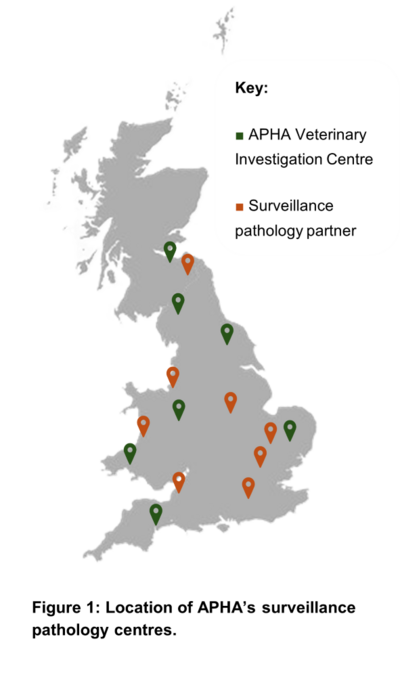
Surveillance programmes for AMR already exist in the farm animal sectors in the UK. Vets and farmers send or whole from diseased and dead animals to the APHA and its surveillance pathology partners, mostly in England and Wales (Figure 1), Scotland's Rural College in Scotland, and the Agri-Food and Biosciences Institute in Northern Ireland. Carcase submissions to 听may be eligible for . Disease investigations are carried out by dedicated APHA vets at subsidised cost and often include tests to identify bacteria and resistance they may carry. Results are reported back to the private vet, who can work together with the farmer to implement tailored treatment and/or management plans. AMR data collected from these submissions are reported by VMD in the annual UK Veterinary Antibiotic Resistance and Sales Surveillance Report (), which is publicly available.
Private veterinary laboratories (PVLs) also accept samples and conduct resistance testing. Across all animal species in the UK, PVLs carry out over 90% of this testing but this data is not routinely collated or shared with government. This means vets and policy-makers have an incomplete picture of how AMR affects UK animals and are less able to take appropriate action to prevent AMR. The Private Laboratories Initiative (PLI) is funded by government and was set up to boost national AMR surveillance across four major animal groups:
- farm animals;
- fish;
- companion animals;
- horses.
Led by the Veterinary Medicines Directorate (VMD), this work supports the UK's commitment to contain and control AMR and will complement government and industry efforts to reduce antimicrobial usage2-4.

The Animal and Plant Health Agency (APHA) deliver the farm animal stream of the PLI. Initial work focused on identifying which labs test for AMR in livestock and how much data they may hold. There are several types of livestock PVLs, including specialist poultry labs, mixed species labs, and specialist cattle mastitis consultancy services. Work has now expanded to identify large mixed or farm animal practices who may also carry out their own resistance testing and therefore hold AMR data.
The PLI has had successful collaboration so far with PVLs. A specialist mastitis consultancy lab, the Vale Veterinary Laboratory, which was founded and run by vet Andrew Biggs from 1994 to present, has contributed anonymised mastitis data since earlier work started in 2021. Several PVLs have since also contributed anonymised AMR data and/or bacterial samples for additional laboratory work within APHA. The PLI aims to be mutually beneficial by providing support and meaningful outputs back to private labs where possible.
The PLI team would like to encourage farmers to discuss AMR with their own veterinary surgeon and support better use of AMR data that already exist. The more we test for resistance and stimulate conversations between farmers, vets, and government, the more accurate the national picture will be. This ultimately helps everyone be better informed about AMR and how to deal with it on an individual basis, giving us the best chance to uphold livestock health and welfare, and avoid unnecessary production losses.
A clearer picture of AMR in livestock has the potential to benefit all: laboratories, private vets, farmers, and the livestock in their care.
1. World Organisation for Animal Health (WOAH). Antimicrobial resistance. 听(last accessed 02 February 2026)
2. UK Government. UK 5鈥恲ear action plan for antimicrobial resistance 2024 to 2029.听听(last accessed 17 March 2026)
3. Responsible Use of Medicines in Agriculture Alliance. Targets task force 3. (last accessed 03 February 2026)
4. RCVS Knowledge. UK ruminant antibiotic stewardship roadmap. (last accessed 03 February 2026)
听


