

A typical kibbutz is a community in Israel usually centred around a dairy farm
When Hamas soldiers broke through the border into Israel last Saturday (October 7), they targeted dairy farms. There are 16 farms in kibbutz's close to the border with Gaza, five of which are now in the army's no go zone, which have been deserted.
Whilst most of the farmers killed were Israeli, many of the workers were from Thailand, some of whom have been kidnapped and taken back to Gaza, or murdered.
Israel
Israel is home to around 115,000 cows producing around 1.6 billion litres of milk per year. There are two farming systems in Israel including 164 kibbutz farms, built around the communities, and another 573 larger private farms called moshav farms.
Ofier Langer, 67, a former Israeli soldier, has run the Israeli Dairy School for the past 13 years.
"It is hard to take this all in. Hamas entered a number of farms and shot people indiscriminately."
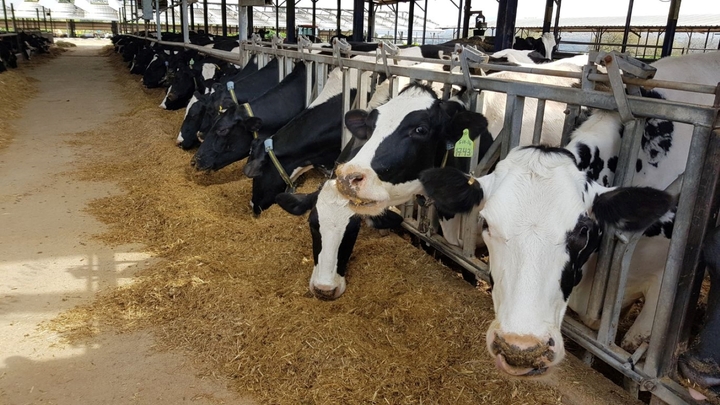
He said the 16 dairy farms in the area were home to between 350 to 700 cows per farm, with average milk yields of 12,500 litres per cow per year.
He said the loss suffered was 鈥榠mmense'.
"We have lost friends and colleagues. Two dairy farm managers and dozens of workers were murdered. This is a heartbreaking moment for our tight-knit community. We share the pain deeply," he said.
Farmer deaths
He added it was still not safe and cows had gone days without food and milking, although the army was leaving them available hay from the sheds.
Volunteers were now being organised to work on the farms which can be reached.
One of the farms targeted was the Alumim dairy farm situated only 10km from the Gaza border.
51AV视频manager Avi Freiman said just as the morning milking was being completed, a terrorist squad arrived at the dairy farm, burned the haylofts and feed trucks, and shooting.
Mr Freiman said: "They fired an RPG missile at the workers' quarters.
"The milk tank was hit by the shots and all the milk poured out. Anyone who tried to escape was shot."
Sixteen workers were killed with eight kidnapped.
"While they were advancing towards the cowsheds, a first responder squad arrived and a heroic five-hour battle ensued, until 10 terrorists were killed."
The cows on the farm have not been milked and only recently a truck managed to take food in to give to the animals.
Sivan Lacker, founder of Mutual Dairy Farming in Israel, said the manager of Kissufim dairy, Reuven Heinek, located just 2km east of the border, had risked his life entering the dairy to try and feed the cows. He and another worker had been killed in the milking parlour.
"Later, soldiers from the Israeli Defence Forces arrived on the farm and blew up the milking parlour. All the terrorists were eliminated."