


Based near Stockbridge, Hampshire, the 1,130 hectare Leckford Estate has been the farming base for Waitrose for the past 94 years. Originally purchased by the partnership's founder, the business continues to produce commodities for the retailers national supermarket chain.
Reflecting its wider strategy to become carbon neutral by 2035, the farm has installed a biomethane collection system developed by Cornish-based Bennaman. Currently the largest system of its type commissioned, the site uses the solid manure from the 500 head beef unit, which is processed into a slurry using a fixed Triolet stationary mixer and modified Vogelsang separator.
The system developed by Bennamann was originally designed to operate with liquid slurry from dairy units, however the requirements from the John Lewis Partnership (JLP) pushed the development of a system which can use solid manures.
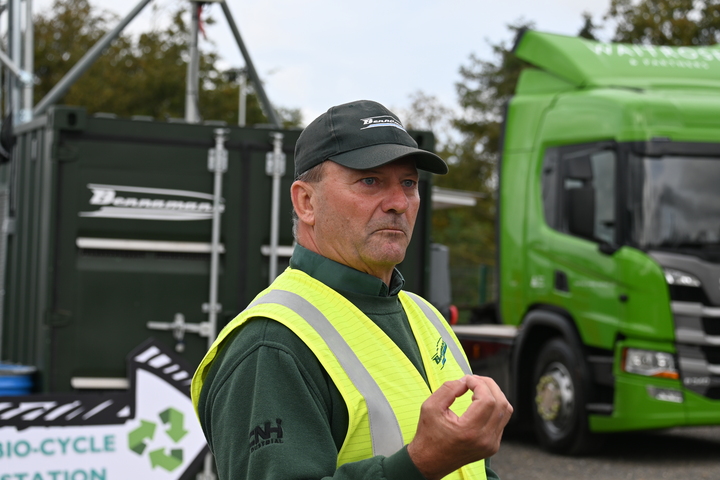
Dr Chris Mann, Co-founder of Bennamann said "The facility at Leckford is the largest we have built, and is the first to be designed to work with solid manures. This has opened the door for creating specific methane collection systems to operate with a wider range of solid products, including those from the pig or poultry sector."
Once separated, the slurry is contained within a covered lagoon from which the raw gas is processed initially to remove the toxic hydrogen sulphide element and then upgraded using a mobile compressed fugitive methane (CFM) skid unit. The raw gas compound comprises carbon dioxide, methane and water vapour at a relative humidity of 80-90 per cent. The skid unit compresses and chills the gas to remove the water content and filters to extract the CO2.
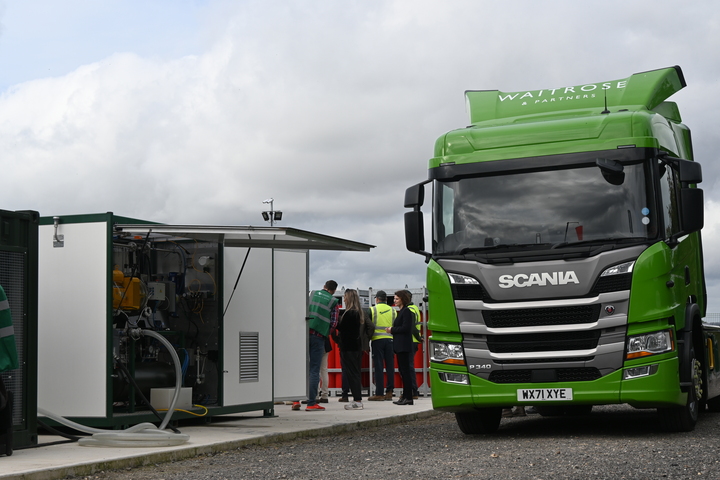
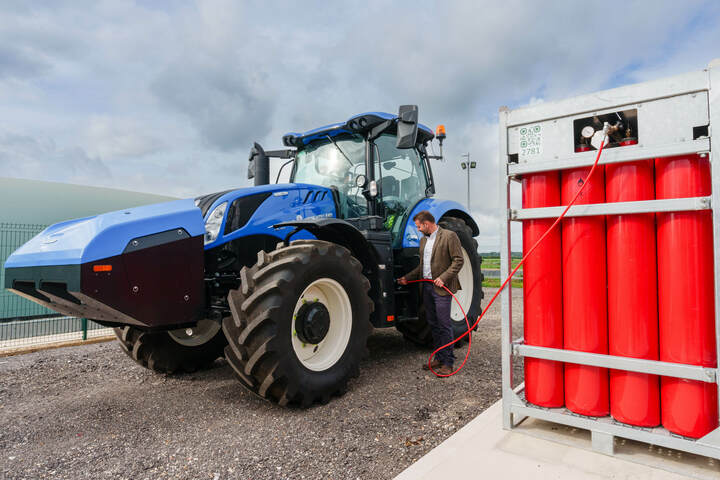
Once purified to an automotive grade, the gas is compressed to 250 bar and pumped into modules of high-pressure cylinders. Bennamann says the use of the road-towable skid unit reduces the upfront cost for individual users, as the system can be brought to the site periodically to refill the high-pressure cylinders and could be shared with multiple farms. For product safety, the toxic hydrogen sulphide gas is removed on the farm using a permanent installation.
To utilise the fuel, Leckford is operating a New Holland T6.180 methane power tractor, however, ambitions for the wider businesses include a complete conversion of the group's HGV distribution fleet to biomethane power by 2028. Currently, JLP is operating 400 biogas lorries, with the ambition that units visiting the estate to collect stock can be refilled from the estimated 70 tonnes of gas produced annually at Leckford.
Responsible for managing the complete Leckford business, which includes the farming enterprise, viticulture, retail and two nine-hole golf courses, Andrew Hoad commented on where the Bennamann system fits with the whole estate.
"The Leckford Estate has a passionate history focusing on nature and conservation, and this is reflected in how the estate is run today. We use a 12-year rotation which includes a three-year herbal ley used to produce fodder for the beef enterprise. The term regenerative farming is becoming overused, we have always run the farms to work with nature, but we are also a commercial business with commitments to deliver produce for our supermarkets.
"Food production is the most important part of land management in the UK, and growing crops purely for energy production to be consumed by a conventional anaerobic digestion plant did not fit with the ethos of Leckford. The Bennamann system allows us to generate a green fuel from our farming system without a reduction in food production, with this fuel being directly used by vehicles on the farm and the wider distribution network."
Longer term, Waitrose says using biomethane at Leckford will reduce the estate's carbon footprint by up to 1,300 tonnes per year, forming parts of the partnership's aim to reach net-zero greenhouse gas emissions by 2035. Viewing its wider supply chain, which includes other UK farming businesses, the requirement for carbon neutrality is targeted to be achieved by 2050.
Combined with the group's projected demand for biogas fuel for its own haulage fleet, this could create an opportunity for farmers to provide both stock on its supermarket shelves, and fuel for its trucks.