


WHAT IS IT?
Cooperia听spp. are another group of roundworm species found in cattle. They are a reddish colour and can reach
lengths of up to 10mm.听Cooperia听spp. have a direct lifecycle with no intermediate host. Female听Cooperia听worms lay very
high numbers of eggs and consequently can contribute heavily to pasture contamination, increasing the risk of disease in young cattle.

WHAT IMPACT DOES IT HAVE?
As a general rule听Cooperia听spp. are considered to be less pathogenic than听Ostertagia听but there is evidence to show
that heavily infected calves suffer poor weight gains and reduced appetite. Cattle that are co-infected with听Cooperia
spp. and other worm species such as听Ostertagia听are morelikely to be affected by Parasitic Gastroenteritis (PGE).
For Parasite听
Resources

LIFE CYCLE
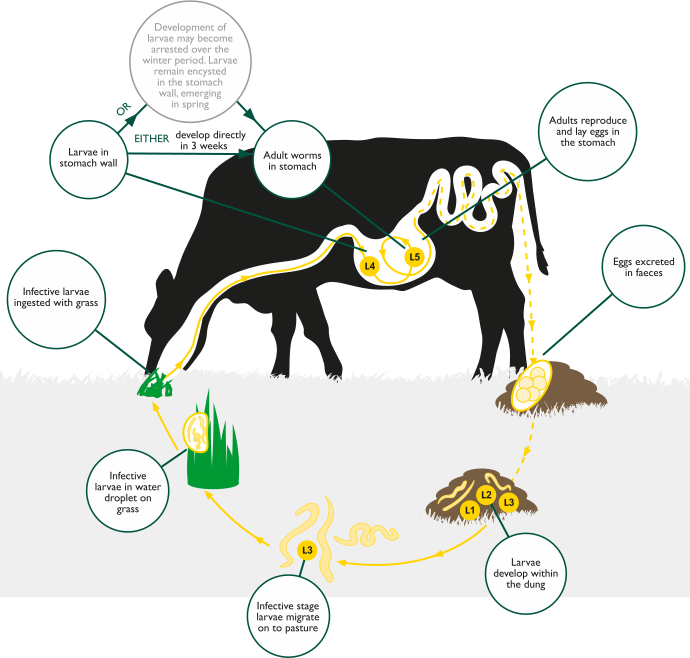
Adult females lay their eggs in the gut of the host and these eggs are shed in the faeces. Once in the environment the eggs release the L1-larvae that completes development to the infective L3-larvae in about four days. Depending on the weather infective larvae can survive on pasture between five and twelve months, i.e. they are capable of 鈥榦verwintering'. Livestock become infected after ingesting infective larvae from pasture. These larvae reach the small intestine where they complete their development to adult worms and females start laying eggs.
The听pre-patent period听(time between infection and development of adult worms which start to produce their first eggs) is two to three weeks. This means that many generations can develop within the same season.

DIAGNOSTICS
As with other worms in young, non-immune cattle,听Faecal Egg Counts (FECs)听can give an indication of the number of worms in the gut, and provide a useful indicator of the need for treatment and the levels of pasture contamination.
听
TREATMENT AND MANAGEMENT
Young cattle rapidly develop immunity to听Cooperia听spp. Parasite management plans put in place to control听Ostertagia ostertagi听in young cattle will be effective in managing the risk of PGE caused by听Cooperia听spp.