



Entering its tenth year, Groundswell's festival of regenerative agriculture might have expanded to cover an increasingly wider range of topics encompassing the entire food supply chain, but the event still held opportunities to present new innovations for both niche agricultural systems and larger commercial businesses.
Treffler cultivator
Recently introduced to the UK market, Treffler is a German manufacturer from Bavaria and produces a range of cultivator and weeding machinery for organic growers. The demonstrated TGA provides ultra-shallow cultivation to cut and lift weeds without significant deeper soil disturbance. The wide duck-foot tines provide a 150% overlap across the three rows, and operate using a single Hardox shank working in conjunction with a leaf spring and shear-box protection.
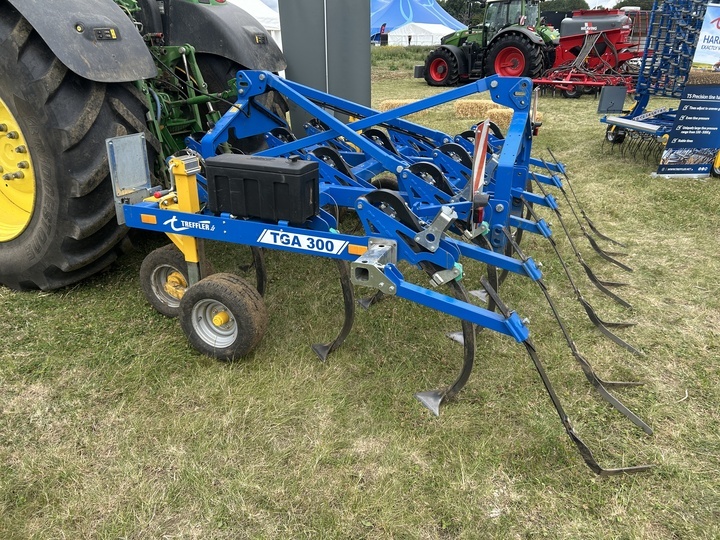
Treffler says this layout provides sufficient weight to keep the tine working depth consistent, to the extent that it can be used in established organic cereal crops to remove weeds post-establishment and before the crop emerges, with the seeds safely 60-80mm below the cultivator working depth. Working depth is controlled by a pair of beam-axle support wheels, with working widths of up to 7.2m offered.
Tow and Fert Multi 4000
Developed to provide on-farm generation of liquid urea through blending a prilled product with water inside the tank, the New Zealand-developed Tow and Fert has been modified with soil food web consultant Wild Soils to allow the generation and application of liquid compost extract as a soil-specific liquid feed product.
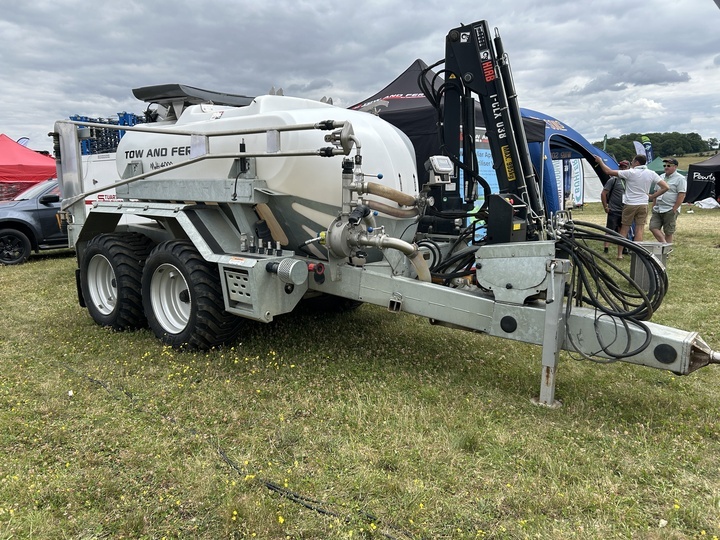
A central hopper typically holds 600kg of farm-produced compost which is agitated with water to produce a compost extract which Wild Soils claim contains 85% of the microbes originally found in the base compost.
READ NOW: Updates for John Deere's 6M range to provide more functionality at a lower budget
These are applied through the twin splash-plate nozzles across a working width of 24m. Application rates are varied based on the compost nutrient constituents and the field requirement.
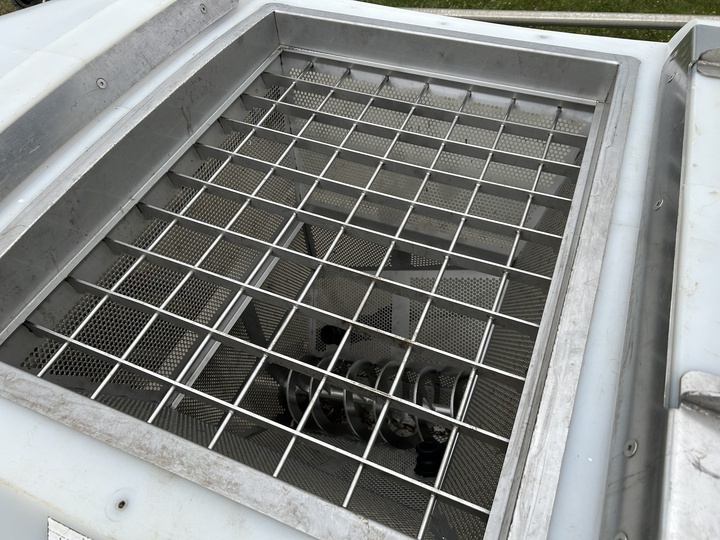
Once the compost mix has been extracted, the remaining woodchip base is augered from the basket and can be reintroduced into the farm composting system to retain the unique biological identity of the compost to maximise the nutrient value to the crop it is feeding.
Horizon DSX seed firming wheel
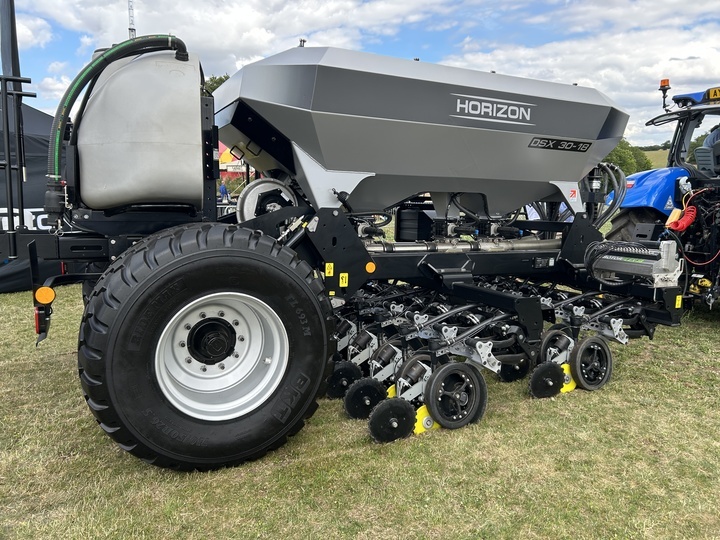
Introduced at the end of 2025, the optional seed firming wheel has been added by Horizon as a factory-fit or retrofit option for all Gen 3 DSX no-till units.
听
Horizon says the option is popular in the drier cropping markets of Hungary, Romania and parts of Poland where seed-to-soil contact can be an issue with looser and lighter soils.
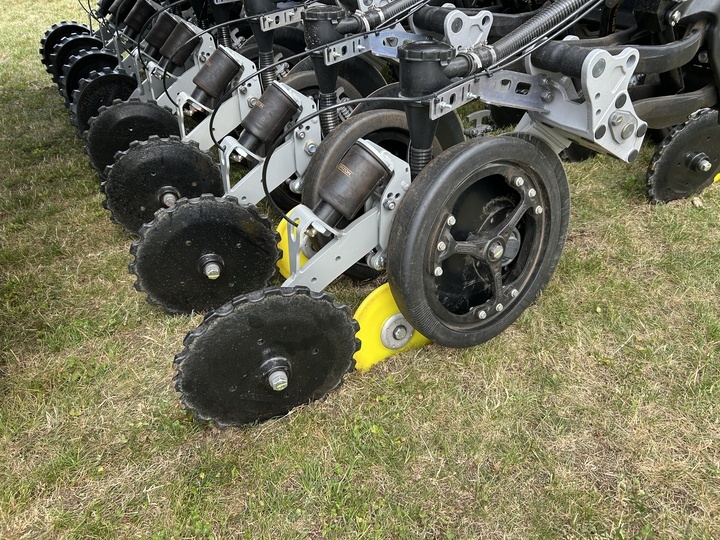
For most UK growers the additional firming wheel is likely to be unneeded, particularly in the wet. However, those using machines later in the spring or during early OSR establishment could find the option useful to improve establishment.
Prices for the kit start at 拢250 per row unit.
TerraBrix compost tea creator
Created by Horizon's eastern German distributor, the TerraBrix system provides batches of 1,000 or 5,000 litres of compost tea through a heated brewing process using an initial batch of 10-15 litres of compost 鈥� ideally produced with input material from the land the tea is due to be applied to. The compost is circulated through a brewing vessel for eight hours to extract nutrients and microbes before increasing the volume to the tank capacity.
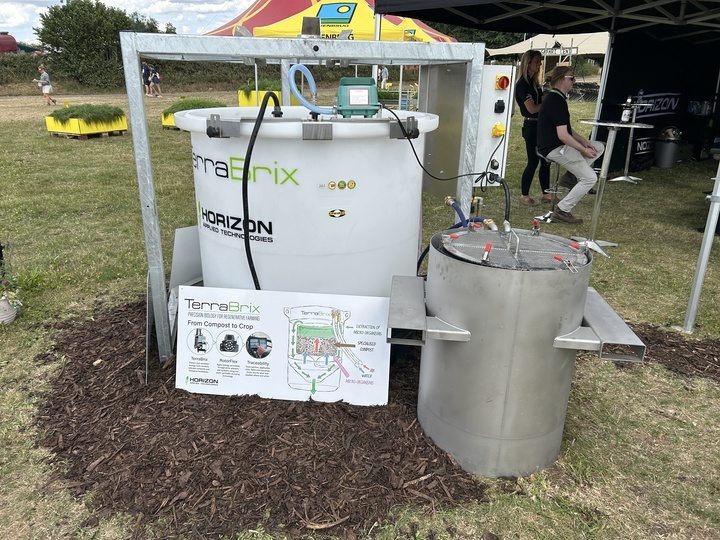
This is brewed for a further 52 hours before the final product can be applied through a conventional boom sprayer or through a dribble bar during planting or drilling.
READ NOW: Kverneland launches high-capacity folding f-drill Plus
TerraBrix says the completed mix can be used to carry other macronutrients in suspension, with application rates typically between 50-100 litres/ha.
Costs for the 1,000-litre system start at 鈧�15,000 (拢12,800).
Sumo grassland aerator
Lesser-known for its grassland machinery range, Sumo presented a 3.0m version of its grassland aerator range. Provided as a front- or rear-mounted machine, the GLA range is offered in working widths from three to six metres with the larger machines folding to 2.9m for transport.
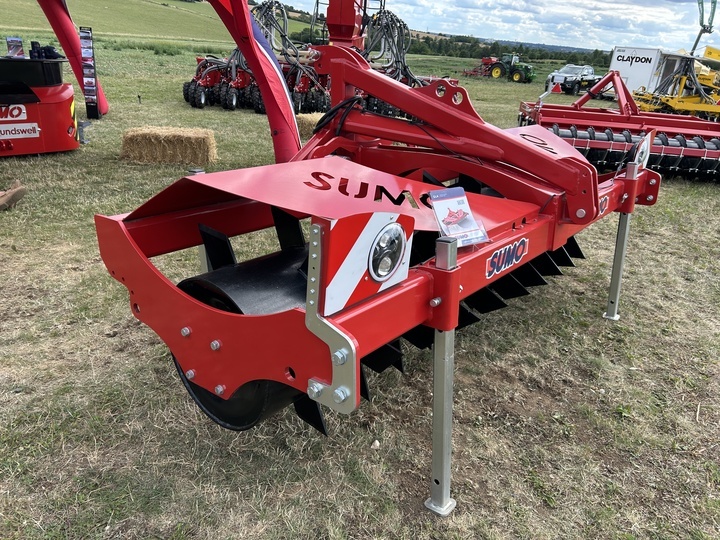
All machines use a 508mm diameter packer with shark-fin blades providing a 175mm working depth. The design uses Sumo's steering headstock which allows the machine to shift left and right under the chassis when pushed or pulled. The front mounting allows users to match the aerator with a rear-mounted low-disturbance subsoiler and overseeder to produce a single-pass multi-action grassland rejuvenation system.
READ NOW: Machinery highlights from the Royal Highland Show
Changing between front- and rear-mounted requires the aeration drum to be removed and flipped so that the blade leading angle is placed in the correct direction to pull into the soil.
LeftField autonomous inter-row mower
Created as part of an Innovate UK grant, and presented as a functional prototype, the Rumi autonomous mower has been designed to provide inter-row mowing in cereal crops 鈥� both organic and conventional 鈥� to nutrient-cycle permanent inter-row companion plants.
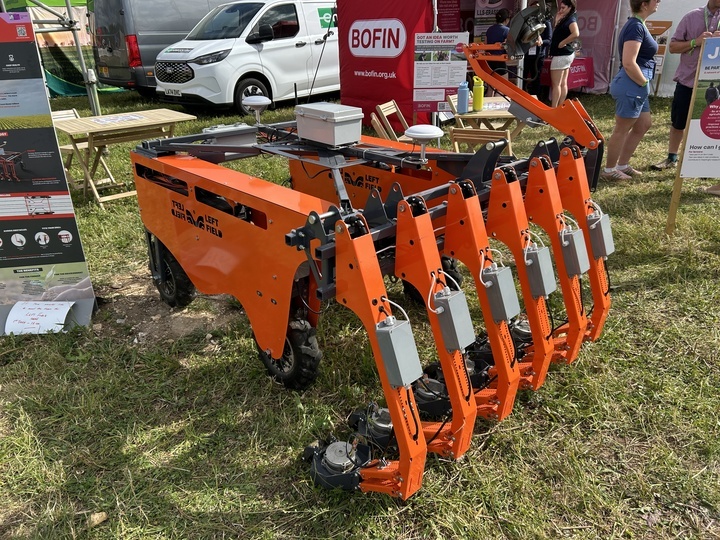
Shown with 250mm row centres, each electrically driven cutting head uses a trio of combine cutterbar knives to mow off plants between rows to reduce crop competition and release nutrients from the biomass back into the soil.
The unit is fully autonomous and uses an RTK-based control system to match the drill or planter, with its current working width set at 1.5m to integrate with a three-metre multiple-based system.
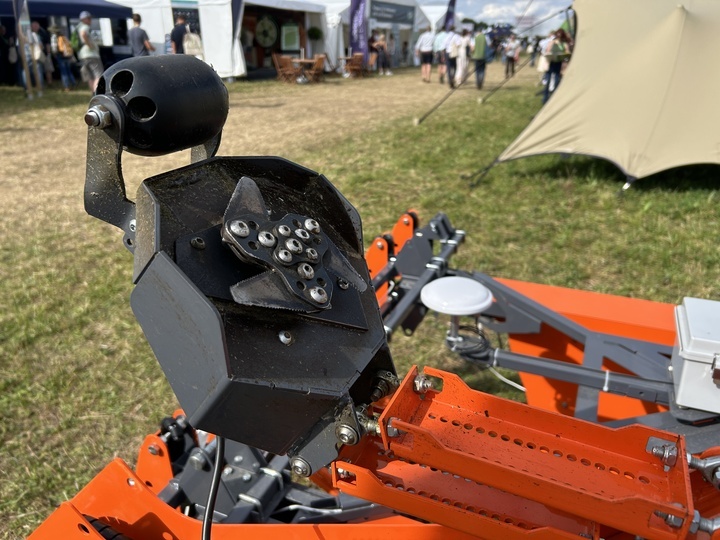
The machine has been developed to provide an alternative weed control and nutrition system, and has a target retail price of 拢8,000, something of a change in a market of autonomous concepts with costs running into six figures.


